Original: $196.40
-65%$196.40
$68.74The Story
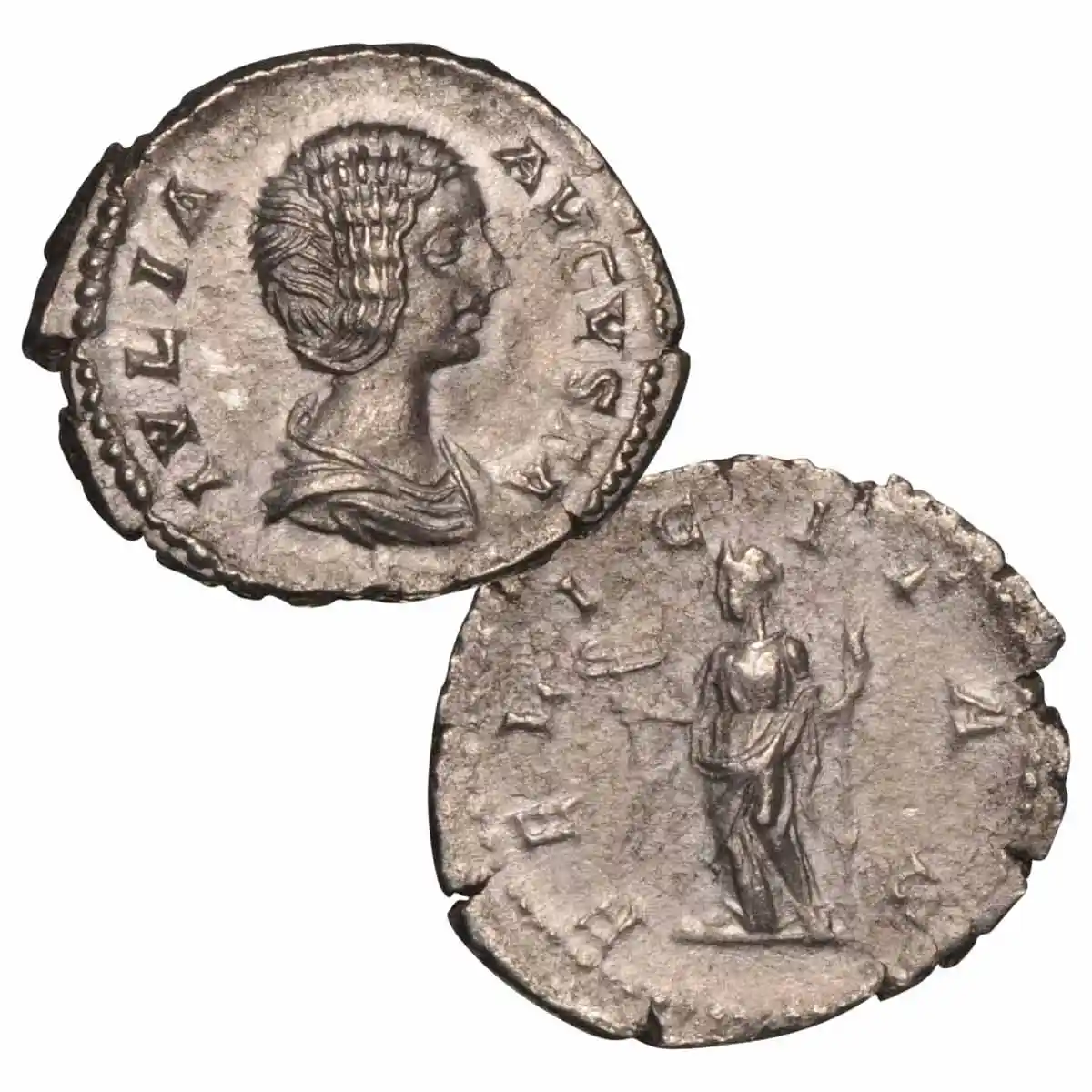
An authentic Roman artefact, the ‘Julia Domna Silver Denarius’ is a stunning example of genuine Roman currency, a tribute to a most beloved figure of the Roman Empire.
Born in what we now know as Syria in 170AD, Julia Domna was the youngest daughter of Julius Bassianus, the high priest of the sun god Elagabal. Coming from high standing and enormous wealth, Julia Domna and her family were a part of the Roman senatorial aristocracy. Due to her promising horoscope, Julia Domna was brought to the attention of Septimius Severus who married her sight unseen. They had two children, the future Emperors of the Rome, Caracalla and Geta.
Julia Domna was one of the most important women to ever exercise power behind the throne in the Roman Empire. When Septimius Severus became Emperor, he named her Augusta (or Empresses). Well-read, with a love of philosophy and a great political sense Julia Domna and her opinions were very much revered and respected by her husband and unlike most women of the time, she would accompany him on his military campaigns.
When Septimius Severus died and his sons Caracalla and Geta ascended the throne, Julia Domna often acted as mediator between the two feuding brothers. After Geta died, presumably at the hands of his brother and in the presence of his mother, Caracalla forbid Julia Domna from mourning.
Despite fractured relations between the two, Julia Domna would often accompany Caracalla on his campaigns and exerted great influence over his decisions. He even left her in control of the civilian administration and gave her the title “Mother of the Senate and of the Fatherland.”
In 217AD, during the campaign against the Parthian Empire, Caracalla was murdered and soon after Julia Domna died. There is great speculation surrounding her death. Some say she starved herself either voluntarily or on the orders of the new Emperor while others say she committed suicide. There are also rumours that she may have even died of cancer. After her death, her body was brought to Rome and she was later deified.
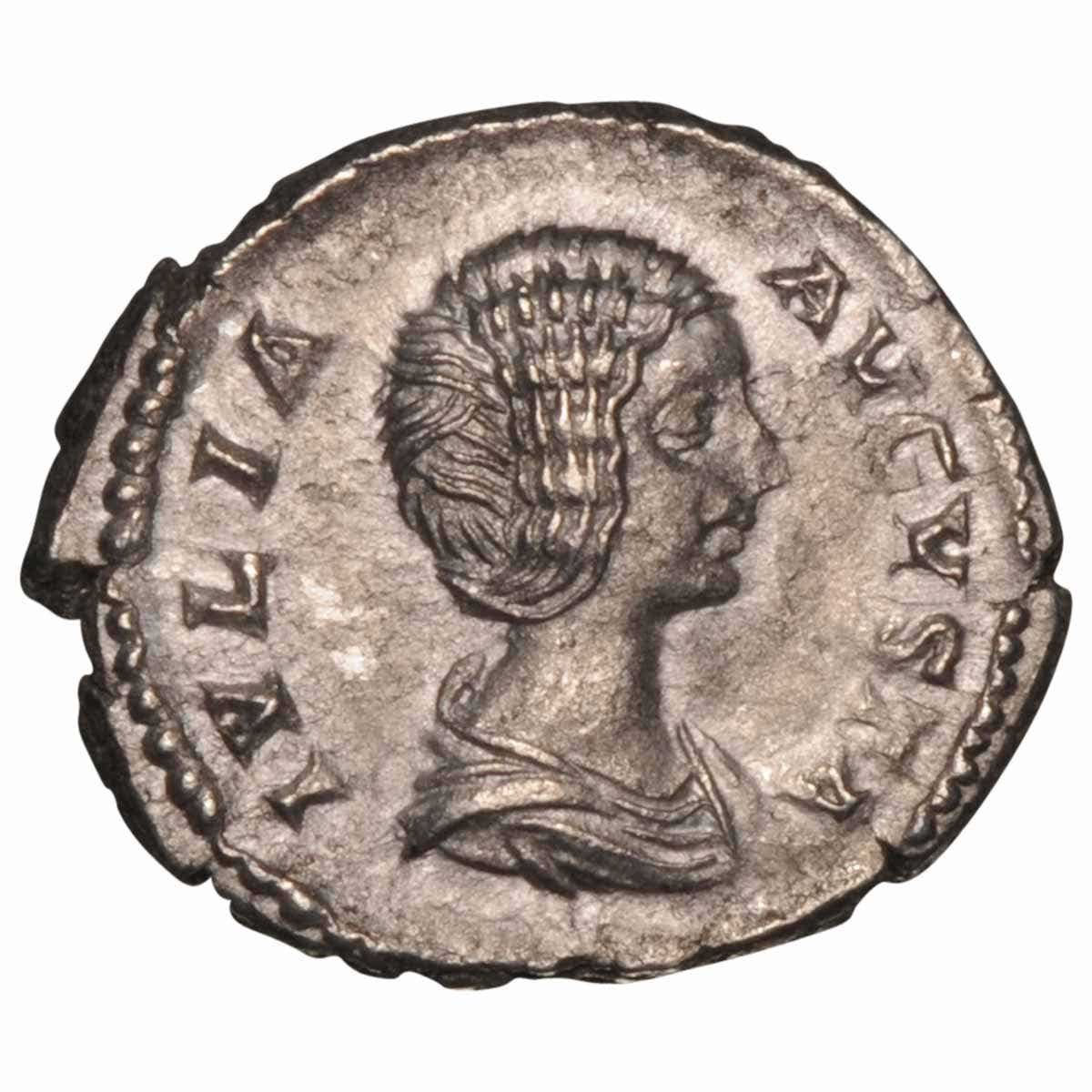
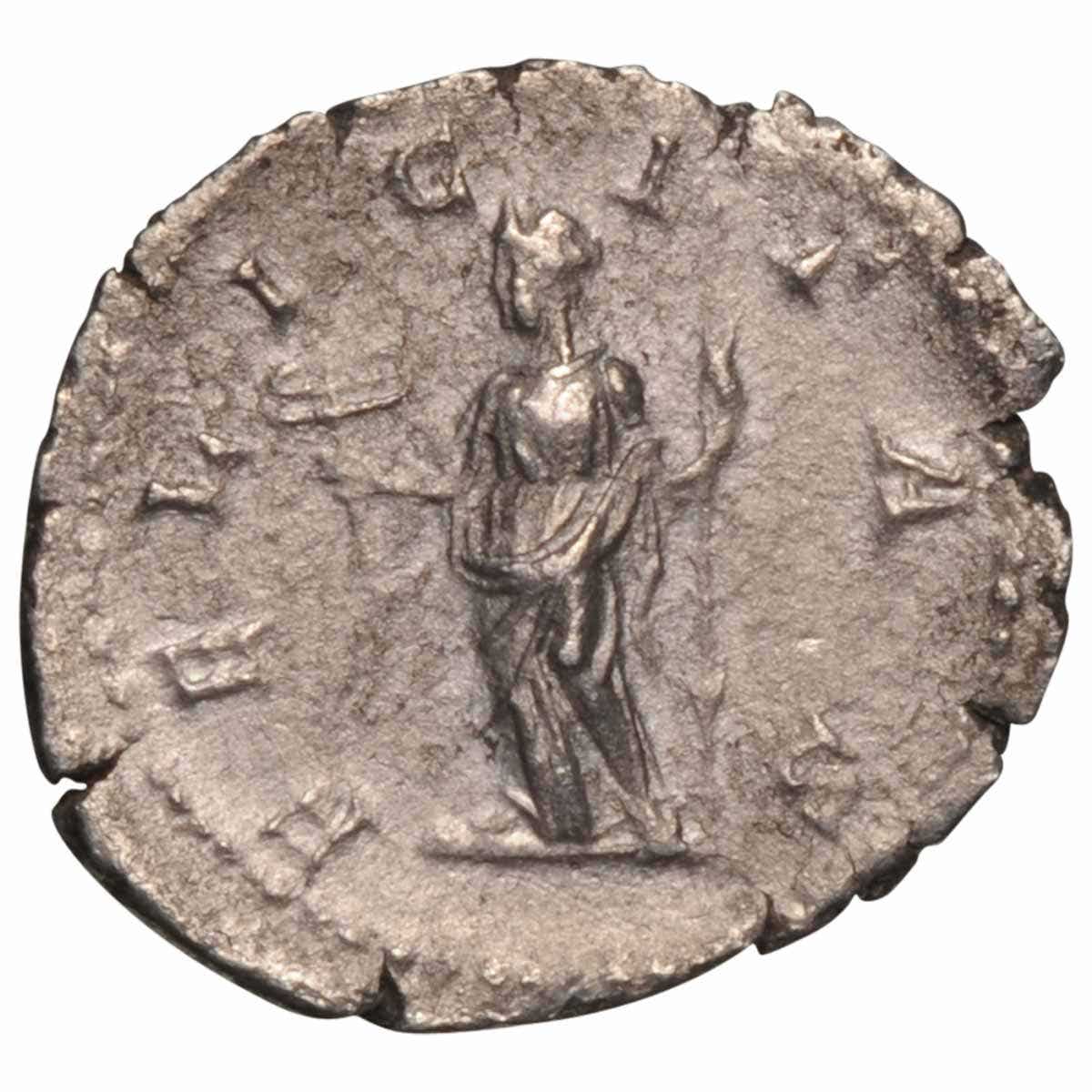
At the request of her husband, Julia Domna’s image and the title “Master Castrorum” (mother of the camp) were struck on coinage. Used in ancient Roman times, the ‘Julia Domna Silver Denarius’ is now yours.
Details & Craftsmanship
Every detail has been carefully considered to bring you the perfect product.
Details & Craftsmanship
Every detail has been carefully considered to bring you the perfect product.
Description
An authentic Roman artefact, the ‘Julia Domna Silver Denarius’ is a stunning example of genuine Roman currency, a tribute to a most beloved figure of the Roman Empire.
Born in what we now know as Syria in 170AD, Julia Domna was the youngest daughter of Julius Bassianus, the high priest of the sun god Elagabal. Coming from high standing and enormous wealth, Julia Domna and her family were a part of the Roman senatorial aristocracy. Due to her promising horoscope, Julia Domna was brought to the attention of Septimius Severus who married her sight unseen. They had two children, the future Emperors of the Rome, Caracalla and Geta.
Julia Domna was one of the most important women to ever exercise power behind the throne in the Roman Empire. When Septimius Severus became Emperor, he named her Augusta (or Empresses). Well-read, with a love of philosophy and a great political sense Julia Domna and her opinions were very much revered and respected by her husband and unlike most women of the time, she would accompany him on his military campaigns.
When Septimius Severus died and his sons Caracalla and Geta ascended the throne, Julia Domna often acted as mediator between the two feuding brothers. After Geta died, presumably at the hands of his brother and in the presence of his mother, Caracalla forbid Julia Domna from mourning.
Despite fractured relations between the two, Julia Domna would often accompany Caracalla on his campaigns and exerted great influence over his decisions. He even left her in control of the civilian administration and gave her the title “Mother of the Senate and of the Fatherland.”
In 217AD, during the campaign against the Parthian Empire, Caracalla was murdered and soon after Julia Domna died. There is great speculation surrounding her death. Some say she starved herself either voluntarily or on the orders of the new Emperor while others say she committed suicide. There are also rumours that she may have even died of cancer. After her death, her body was brought to Rome and she was later deified.
At the request of her husband, Julia Domna’s image and the title “Master Castrorum” (mother of the camp) were struck on coinage. Used in ancient Roman times, the ‘Julia Domna Silver Denarius’ is now yours.


